


Franciscan Jubilee 2026
From the Stigmata to the Canticle: Rome and Assisi Celebrate the Eighth Centenary of Saint Francis
2026 marks a historic milestone for spirituality and Christian art: the eighth centenary of the "Transitus" (the passing) of Saint Francis of Assisi. Following a journey that began in 2023, we have now entered the heart of the Franciscan Jubilee Year, a period of grace that deeply touches our city as well.
Rome, the place where the Poverello sought the approval of his Rule, joins Assisi in this special Jubilee. For those involved in sacred art, this centenary offers a unique opportunity to rediscover Franciscan iconography: from the earliest medieval depictions to contemporary interpretations that still strive to capture the mystery of the Stigmata and the beauty of the Canticle of the Creatures.
Visiting the Franciscan churches of Rome during this year is not only an act of devotion to receive the Plenary Indulgence, but also an aesthetic journey through masterpieces that have shaped the history of sacred art worldwide.
Historical Notes
From La Verna to the Transitus (1224-1226)
The final two years of Saint Francis of Assisi's life are considered his "spiritual and artistic testament"—a period of physical suffering but profound mystical elevation that changed sacred iconography forever.
The Seal of the Stigmata (1224)
It all began on Mount La Verna in September 1224. According to sources (such as the Vita Prima by Thomas of Celano), Francis received the signs of Christ's Passion. This event is not only a theological milestone but an artistic revolution: from that moment on, the "Poverello" was portrayed as Alter Christus (another Christ), a man bearing the marks of the divine upon his body.
The Birth of the Canticle of the Creatures (1225)
Despite an eye disease that left him nearly blind, Francis composed the Canticle of the Creatures (or Canticle of Brother Sun) in 1225 at the convent of San Damiano. It is the first great text of Italian literature and an aesthetic manifesto: the beauty of creation (the sun, the moon, the water) becomes the path to God, influencing centuries of landscape painting in sacred art.
The "Transitus" and His Legacy (1226)
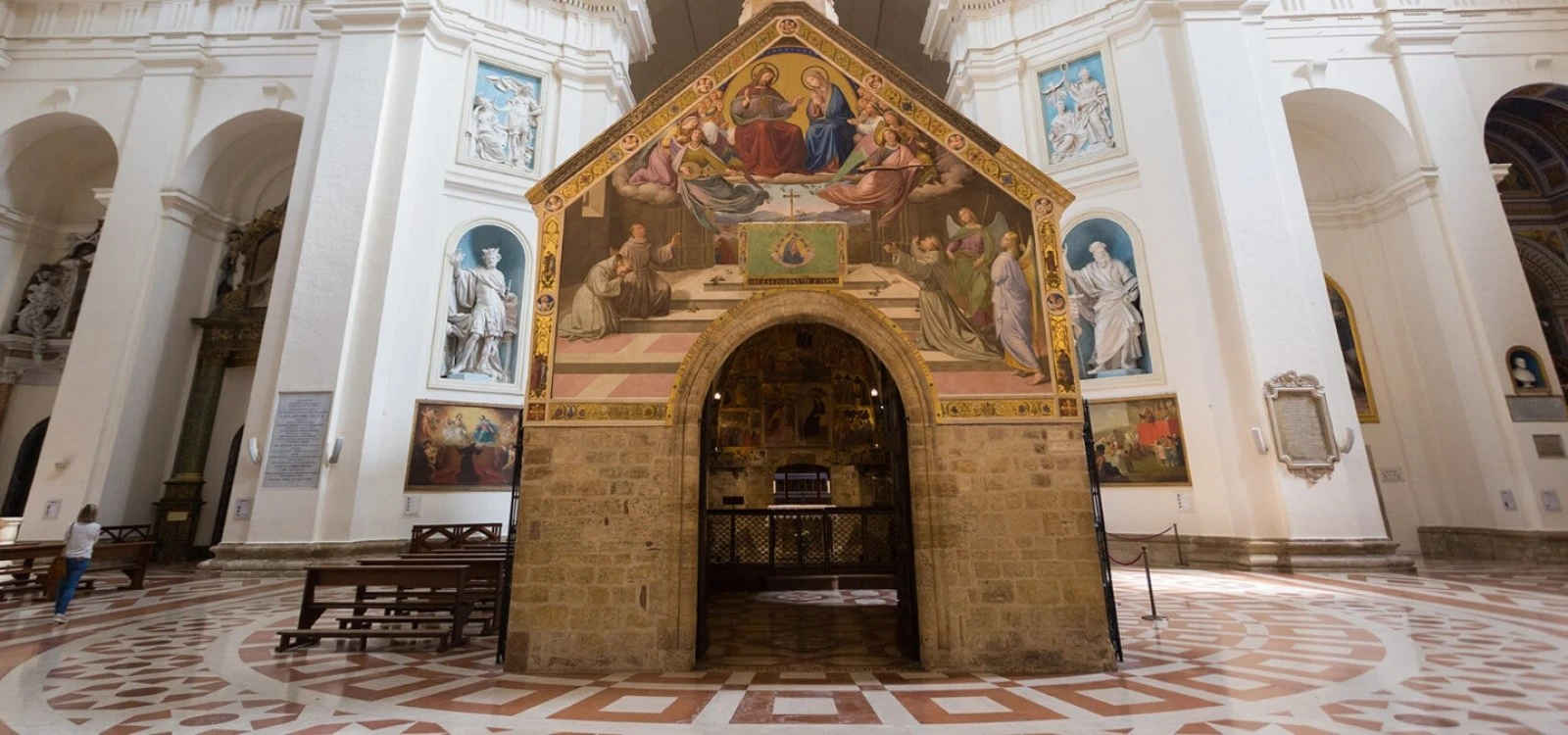
Feeling "Sister Death" approaching, Francis asked to be taken back to the Porziuncola, the birthplace of his vocation. He died naked on the bare earth on the evening of October 3, 1226. Only two years later, in 1228, Pope Gregory IX proclaimed him a Saint, sparking the construction of the Basilica in Assisi and an unprecedented artistic flourishing (from Cimabue to Giotto).